
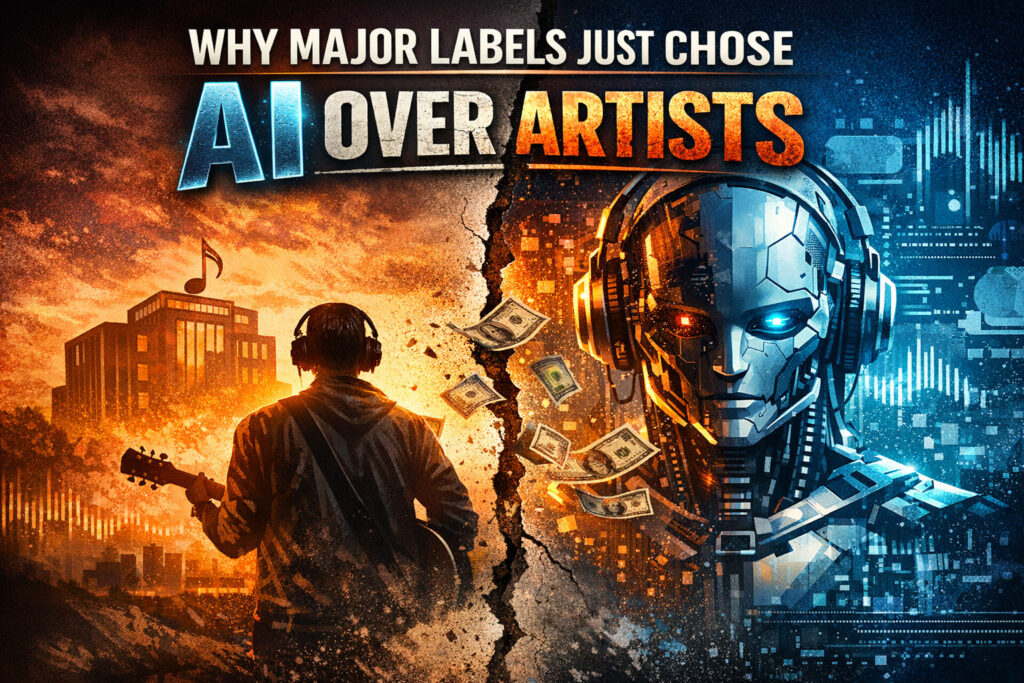
Something big just happened in music, and it didn’t come with sirens and flashing lights. It came disguised as a normal music industry announcement. While many artists were focused on releases, playlists, and promo…Their Spotify wraps the power structure underneath everything quietly adjusted itself.
That matters more than any trending sound right now.
The Deal That Raised The Eyebrows Of Many
Warner Music Group has partnered with Suno, an AI music company tied to the same scraping concerns labels were fighting not long ago. The same company Timbaland used to jacked other music producers by feeding their music to it. If you haven’t about this, look into it. Just Google Timbaland and Suno, I’m sure it’ll pop up.
Any way, the question at hand just what they did, but why.
Fighting AI Didn’t Seem To Work
Labels tried lawsuits. They tried slowing things down. None of it stopped AI music from improving, spreading, or multiplying. At some point, they accepted a hard truth. AI music isn’t going away.
So instead of standing in front of the flood, they decided to build the dam.
Why AI Terrifies the Traditional Label Model
AI doesn’t behave like artists do. t doesn’t ask for advances. It doesn’t argue over ownership. It can generate more music in a day than a human can in a lifetime.
That breaks a system built on scarcity and control. Labels don’t fear bad music. They fear unlimited music they don’t control.
From Resistance to Gatekeeping
This partnership isn’t about collaboration. It’s a huge power play, it’s about positioning. They’re planting their flag at the center of AI music’s future and saying, “If this thing prints money, it runs through us.” building a simple funnel right into their own pockets.
The Cliche Opt In Language (Hate This Crap)
You’ll hear the typical words like protection, participation, and opportunity. That last one is huge. This sounds friendly and promising at first. That’s how they ease you in. Soon, it becomes expected…The norm. Once AI models are trained and locked, the catalogs feeding them become permanent leverage.
At that point, control shifts fast.
Artists as Data, Not Creators
If you’re not paying attention to your voice, your writing patterns, your metadata, and your digital footprint, you’re being used.
That’s the dangerous part they aren’t being obvious about. Ownership Is the New Baseline. Artists who don’t control their masters, metadata, and licensing decisions are standing on unstable ground.
Hope is not a strategy anymore.
What the Future Artist Actually Needs
The artist moving forward needs to put as much time into protecting IP as they do socials. They need to mind their music’s business. If major labels are licensing catalogs to machines, independent artists need to license themselves to the market intentionally. Directly. Carefully. On terms they understand. That’s the real response here, not just panic or outrage.
Although both are more than acceptable.